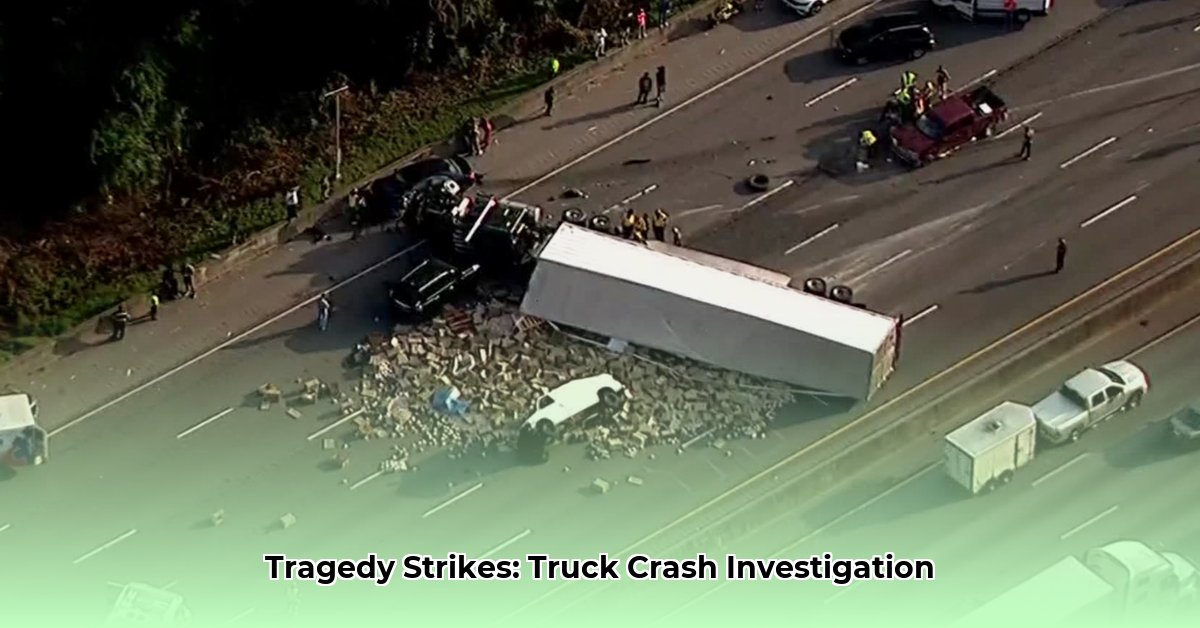
Two Recent Rollovers Highlight Highway Safety Concerns
Two recent tractor-trailer rollovers, one on I-95 near Philadelphia, Pennsylvania, and another on US-1 in North Carolina, have raised serious concerns about highway safety. While both incidents resulted in only minor injuries, the potential for catastrophic outcomes underscores the urgent need for improved safety measures. Discrepancies in initial news reports from various sources also highlight the need for standardized accident reporting protocols. For more information on braking systems, see braking system safety.
Incident Details and Potential Causes
The I-95 incident, according to initial reports, involved more than just the overturned truck, suggesting possible contributing factors like distracted driving or tailgating. Details regarding the North Carolina accident remain unclear. Investigative agencies are currently exploring multiple possible causes, including driver fatigue and potential mechanical failures. Questions remain regarding the role of road conditions and design in both incidents. Did sharp curves, poor road surfaces, or adverse weather conditions play a role? The absence of definitive answers necessitates a thorough investigation.
Expert Perspectives: A Call for Action
"Current driver training standards may not adequately prepare drivers for the unique challenges of handling large vehicles in diverse conditions," states Dr. Emily Carter, Transportation Safety Expert at the National Transportation Safety Board. Further, "Consistent and thorough vehicle maintenance, along with the adoption of advanced safety technologies, are crucial for mitigating the risks associated with these large vehicles," added Chief Inspector David Miller of the Pennsylvania State Police.
Actionable Steps for Enhanced Highway Safety
Numerous actions are needed across various levels to enhance highway safety:
Improved Roadway Safety Reviews: State Departments of Transportation (DOTs) should conduct thorough roadway safety reviews at accident sites and surrounding areas; enhance signage, and improve road markings in high-risk zones.
Increased Funding for Safety Technology Research: The Federal Highway Administration (FHWA) should increase funding for research into truck stability technologies and promote the wider adoption of electronic stability control (ESC) systems.
Stricter Vehicle Maintenance and Driver Training: Trucking companies need to implement stricter vehicle maintenance schedules, provide enhanced driver training focusing on safe handling techniques in challenging conditions, and utilize driver monitoring systems.
Standardized Accident Reporting: Law enforcement agencies must develop standardized accident reporting procedures across states to facilitate a more comprehensive understanding of trends and areas that require improvements.
Investment in Advanced Driver-Assistance Systems (ADAS): State DOTs should invest in ADAS infrastructure, such as lane-keeping assist and adaptive cruise control, and improve road design to incorporate safety-focused engineering features.
Consistent National Driver Training Standards: The FHWA should establish and enforce consistent national truck driver training and qualification standards across all states.
Comprehensive Telematics Systems and Driver Accountability: Trucking companies should integrate comprehensive telematics systems to monitor driver behavior and vehicle performance, and implement robust driver accountability programs.
Advanced Technologies for Accident Reconstruction: Law enforcement should invest in advanced technologies for enhanced accident reconstruction and data analysis.
Risk Assessment and Regulatory Implications
The recent accidents highlight several key risk factors: inadequate driver training, vehicle maintenance issues, poor road design/maintenance, and a lack of advanced safety technology. Mitigation strategies involve enhanced training programs, stringent maintenance schedules, improved road designs, and government incentives for adopting advanced safety technologies. A thorough review of existing commercial vehicle safety regulations is necessary to identify gaps and implement necessary improvements. These incidents underscore the need for a multifaceted approach addressing both immediate needs and long-term solutions.
Conclusion: A Collaborative Effort for Safer Highways
These incidents serve as a critical reminder of the inherent risks associated with large commercial vehicles on our highways. Addressing these issues requires proactive collaboration among state and federal agencies, trucking companies, and law enforcement. A robust and ongoing investigation, coupled with decisive action on the recommendations outlined above, are essential to creating and maintaining safer highways for everyone.